


Aviva, based in Christchurch, Aotearoa New Zealand, provides support to children, young people and adults who have experienced family or sexual violence. Founded in 1973 as Christchurch Women’s Refuge, it was New Zealand’s first dedicated refuge for women who had experienced domestic violence.
Over the last 50 years Aviva’s focus has shifted as it has evolved from being an organisation dealing with the consequences of domestic violence to becoming an organisation working to break the cycle of intergenerational harm, by preventing it from happening in the first place.
Aviva recognised the link between witnessing family violence as a child and growing up to repeat violent behaviours in relationships. In 2016 the organisation began developing and delivering its services for children and young people which focused on breaking the cycle of intergenerational violence.
Each year Aviva supports around 1,200 people who have experienced family or sexual violence, including people who use, or are at risk of using, harm. Its emergency helpline is open 24 hours a day, 365 days a year and receives over 4,000 calls every year.
Continue reading to learn more about this project. Alternatively this case study is available to download as a PDF in English and Spanish.
Background
A child’s first contact with Aviva usually takes place following a referral from their school, a counsellor, GP, another CSO or Oranga Tamariki (the Ministry for Children). Aviva reports that children are present at 80 per cent of all violent incidents in the home, with 14 per cent of children in New Zealand reporting having been hit or physically harmed by an adult. As there is a strong link between witnessing family violence or domestic abuse as a child and growing up to repeat violent behaviours in relationships, Aviva focuses on teaching children from a young age that violence is wrong and providing a framework to break the cycle of family violence. Aviva began developing and delivering its services for children and young people in 2016, as part of its strategy to break the cycle of intergenerational violence.
The Model
Once a child has been referred to Aviva they will have an initial meeting with their family violence kaimahi (support worker). This is usually an informal meeting and, depending on the age of the child, they may play a game of cards or chat over a meal as they begin to develop a rapport. The objective of the first meeting is to identify the child or young person’s goals in working with Aviva and will involve the family as well as the child. During this meeting children and their family will be provided with information about Aviva’s confidentiality policy and complaints process in case they have any concerns in the future.
Following this initial meeting children will usually be referred onto Aviva’s tamariki (children) or rangatahi (youth) programmes. Both programmes use individual or group sessions to help break the stigma around family violence. Very often, participants may never have spoken to another young person about what they have experienced. When discussing violence within the home, Aviva always makes it clear they are talking about bad behaviours rather than bad people.
Aviva’s RISE (Relationship and Individual Safety Education) programme focuses on children aged between 5–8 and 9–12 years old who have experienced or witnessed violence at home. Sessions take place over a ten-week period with a maximum of ten participants in mixed gender groups.
These sessions are designed to be fun and informal. Children are taught to recognise their feelings and use them to help themselves stay safe. Course leaders use age-appropriate techniques including games, puzzles or craft sessions to build trust and rapport between themselves and the children. Children learn about healthy relationships, and have discussions around bodily autonomy and consent, what constitutes emotional and physical abuse and what to do when they identify that this is what is happening.
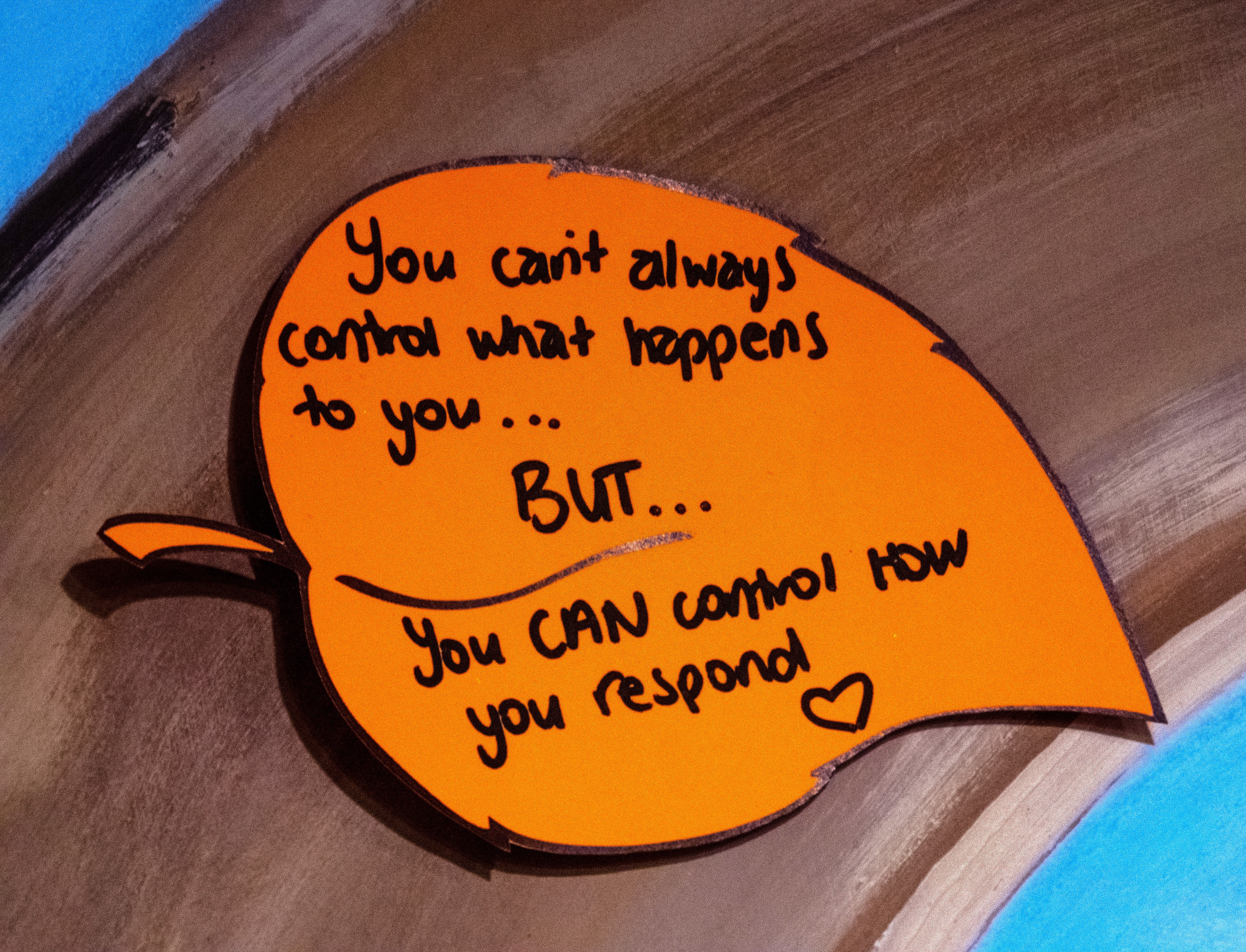
Above: Aviva uses artwork to help children name and express their emotions.
As the weeks progress, children are encouraged to develop strategies for managing their emotions using tools such as a coping wheel. For example, they may learn to identify that if they are feeling stressed they can talk to a friend; if they are feeling anxious, dancing to music might help and if they are feeling angry, drinking a glass of water or breathing slowly while counting to ten could help them calm down.
Sessions are tailored to the children involved. If there are children who struggle with literacy, an arts-based approach may be used. Where children with high behavioural needs are participating the groups may need to be smaller.
Aviva’s rangatahi services are designed for young people aged 13 and above who have experienced or witnessed family violence, or who are at risk of using violence themselves. One key difference here is that children over the age of 16 do not need parental consent in order to be involved and family/wh¯anau involvement is led by the young person with consideration of their safety and wellbeing needs.
Sessions are structured in a similar way to those for tamariki but with a greater emphasis on discussion between participants. The young people are encouraged to guide the sessions in the directions which most resonate with them.
Through these discussions and activities facilitators become aware of previously unidentified areas of concern, at which point other agencies, or even the police, may need to become involved. Both the rangatahi and tamariki group sessions are co-facilitated by two family violence kaimahi. This allows children to see adults modelling positive relationships. Ideally, co-facilitators would be diverse in terms of gender and ethnicity to provide a range of experiences that children may identify with. Co-facilitation allows each employee to work to their strengths, be those having difficult conversations about consent, or playing games. A small amount of disagreement between co-facilitators can even be positive, allowing children to see two adults compromising and working together effectively.
Outcomes
Working with children and young people who have experienced trauma early in life is an ongoing process and outcomes can be hard to quantify. As neither the rangatahi nor tamariki sessions are mandated services, when a child or young person chooses to engage with the sessions it can be seen as a success. Often children who have completed one programme will ask to take another one.
Breakthrough moments can happen during the sessions themselves. Children may vocalise problematic behaviours at home that they have never spoken about before, or identify that they are experiencing abuse in a romantic relationship.
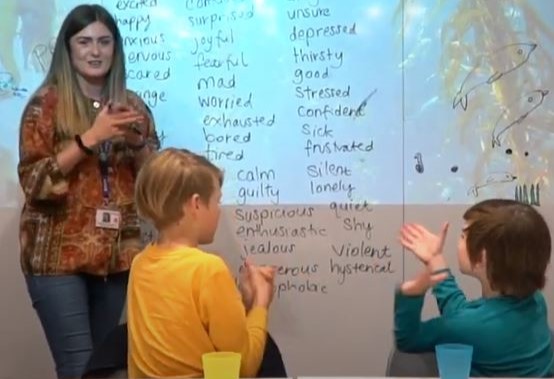
Above: Tamariki sessions include group activities to build connection between the children and their kaimahi.
Next Steps
Aviva is currently developing workshops designed to amplify young people’s voices and create a safe space in which to discuss relationships and talk about the positive and negative influences in their lives. These workshops are intended to give young people an opportunity to identify the type of support they need from the adults around them including teachers, family or professionals.
Resources Required
- Recruiting and investing in committed and empathetic staff is critical to this model of working. Staff who are able to build positive relationships with tamariki and rangatahi are the cornerstone of Aviva’s work.
- To support staff’s own emotional well-being, family violence kaimahi have clinical supervision sessions with their manager once a month, to discuss their work and the impact it may be having on their mental health. Additionally, staff meet with an external supervisor every one to two months. This will be a professional they have chosen themselves, with whom they are able to build a relationship over time, and discuss their work and any emotional challenges it poses in confidence.
In order to make tamariki and rangatahi sessions as accessible as possible, Aviva offers school pick up and drop offs for some children attending these session.
Challenges
In a programme where so much rests on the relationship between the staff member and the young person, staff illness and absence can be challenging. A young person may have learnt to trust and open up to the kaimahi working alongside them, but feel inhibited speaking to someone else. This can lead to a setback in their progress. During the Covid-19 pandemic this was particularly challenging, with higher levels of sickness amongst staff and the children they work with. Quick, virtual check-ins were used to maintain relationships during this period.
In some cases there can be resistance from parents to their children engaging with Aviva. This is especially true when it is the parent who has been using harm. Parents may struggle with the idea of their child getting support or dislike the idea that they are being talked about ‘behind their back’. Aviva’s kaimahi work hard to overcome this and to explain that the focus of the programmes is on the positive development and well-being of the child, rather than on the behaviour of the parent.
Group sessions may present a challenge for children and young people who are more nervous about sharing. Opening up can be difficult for those feeling whakama (shame) around their experience. Empathetic and experienced facilitators are needed to encourage everyone to participate.
Top Tips
- Invest in staff well-being – relationships between young people and their support worker are key to the success of this model. When you create a positive working environment for staff it means children and young people who take part in the tamariki and rangatahi sessions are entering a supportive and affirmative space.
- Sessions should be fun – if young people have a happy and healthy experience of seeking help, they will stay engaged and will be more likely to seek help should they need it in the future.
- Setbacks in people’s lives can happen for a huge range of reasons. If someone needs to re-engage with your services at some point this does not mean the initial programme has failed. It should be seen as a positive that they feel able to reach out for more support.
Make services as accessible as possible and keep physical and administrative barriers to an absolute minimum. Engaging with support services should not be a test of motivation and endurance.
Contact Details
To find out more about Aviva’s work please visit: www.avivafamilies.org.nz or email [email protected]
Further Reading
Two further case studies focusing on engaging young people in advocacy in Aotearoa New Zealand can be found here.
