


This article was published in the ISS International Research Centre Newsletter of August-September 2023 and is available for download in English, French and Spanish.
In this article, Khadijah Madihi, Child rights, family and alternative care expert, Founder of Asia Family First & ISS Special Advisor on Asia Affairs, briefly elaborates on the importance of kinship care and shares promising practices.
In the intricate tapestry of Asian family dynamics, kinship care flourishes as a revered communal approach, wherein extended family members readily assume the role of primary caregivers when biological parents are unable/absent. This enduring tradition traverses diverse cultures, serving as a testament to the unwavering commitment of extended family networks to ensure the well-being and prospects of their younger kin. Amid Asian values, which hold familial bonds in deep reverence, kinship care has matured into a practice that not only safeguards cultural heritage but also cultivates resilience, shared responsibility, and a sense of unity within communities.
At the heart of kinship care lies the profound belief in collaborative decision-making. Collectively, family and community members come together to align a child’s care with cultural norms and common values, fostering intergenerational connections. As societies grapple with evolving family structures and child welfare challenges, revisiting kinship care's wisdom offers valuable insights for creating nurturing environments. Rooted in familial ties, kinship care resonates with Asian societies by echoing respect for elders, shared duty, and the interdependence that forms the bedrock of traditional family values.
Resonating Cultural Significance
Asia's social fabric is woven from diverse cultures, languages, and traditions, and finds a common thread in the profound appreciation for kinship care. This practice embodies the intricate interconnectedness of familial ties, transcending the confines of immediate relations. Unlike nuclear families, kinship care fosters a supportive network spanning generations, enhancing a child's upbringing with diverse experiences. Grandparents, aunts, uncles, and cousins collectively nurture a child’s development, enriching their journey with meaningful insights that extend beyond their immediate family unit.
Apart from nurturing relationships, kinship care plays a pivotal role in preserving cultural heritage. In an era where globalization can erode cultural identities, kinship care stands as a guardian of continuity. It ensures the transmission of ancestral practices, traditions, and values across generations. Often central to kinship care arrangements, grandparents become custodians of cultural heritage, preserving narratives and wisdom that might otherwise fade away. This dynamic intergenerational exchange equips children not only with a sense of identity and belonging but also with a broader outlook on life that resonates with the diversity of their heritage.
Practice Example: Hong Kong - Child Care Training for Grandparents
The Social Welfare Department (SWD) initiated a ground-breaking two-year pilot project, the "Child Care Training for Grandparents" in 2016-2017 exemplifies intergenerational caregiving. This initiative not only strengthens familial bonds but also empowers grandparents and key caregivers with essential child-rearing skills, acknowledging their pivotal role in child well-being. Targeting both current and soon-to-be grandparents of children aged from birth to under 6 years highlights the crucial role grandparents play in nurturing children and strengthening familial ties. Encouragingly, the programme's success prompted an expansion, providing a substantial 840 training openings for the 2020-2021 period1.
Embracing Flexibility and Collaboration within Cultural Nuances
The strength of kinship care lies in its inherent flexibility. Unlike rigid standardized systems, kinship care seamlessly adapts to the unique circumstances of each family. Recognizing that parenthood's journey is far from uniform, kinship care embraces this reality by permitting families to adapt caregiving arrangements to the specific needs of the child and the family unit. This underscores the belief that parenting is a dynamic process nurtured by the collective wisdom of the community.
Collaboration stands as a cornerstone of kinship care. Family members, community leaders, and social workers come together to determine the life course of a child ensuring that the care arrangement aligns with cultural norms, familial values, and, most importantly, the child's best interests. This approach goes beyond providing stability for children; it encapsulates the essence of community, bridging generations through shared obligations.
Glimpses of Practice in South East Asia Context
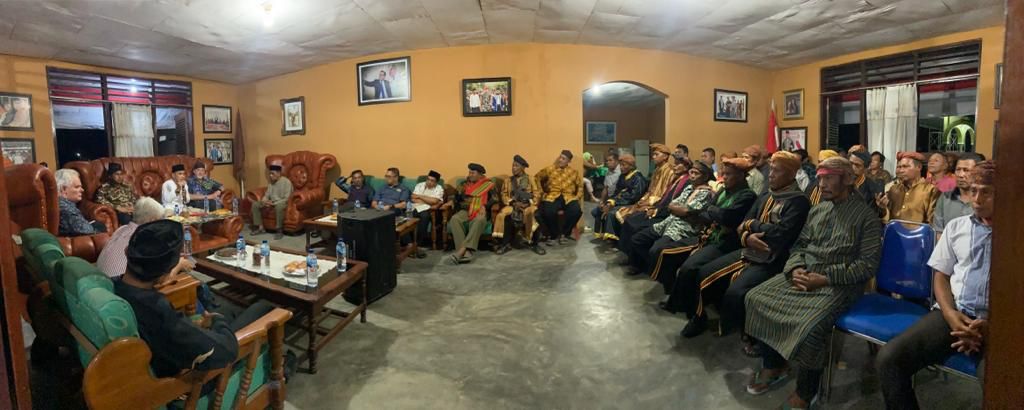
In Indonesia, kinship care thrives as an unregulated yet widely embraced alternative for vulnerable children. The diverse manifestations of kinship care in Indonesia reflect its rich tapestry of ethnic communities, where the practice has seamlessly woven itself into various tribal dialects and cultural practices. For instance, within the Sundanese community, the tradition of "ngukut anak" (care of child) entails entrusting a child to the care of immediate family members. Meanwhile, the Javanese community practices "mupon/ngenjer," whereby a relative child is embraced, embodying the belief in the potential for bearing one's own child. The Maluku society follows "mata rumah," a tradition where family members from the same ancestral lineage collaboratively decide on care arrangements (as depicted in the image below). Meanwhile, in Minang-West Sumatra, the indigenous people embrace "anak dimbing kepakanan," which translates to taking ownership of care and supervision, particularly for nieces and nephews2. These varied approaches underscore the cultural nuances and adaptations within care provisions, firmly anchored in local customs. Importantly, they reaffirm the cultural norm of nurturing children within extended family and community contexts, emphasizing familiarity and attachment, crucial for children's well-being and adjustment.
Similarly, both Myanmar and Vietnam embrace kinship care without regulatory oversight from local or government child welfare agencies. In the case of Vietnam, kinship care has long been a deeply ingrained traditional option, with children placed under the care of extended family members. This choice is preferred over foster care due to the perception that the latter involves children from challenging backgrounds3. In Myanmar, where extended family households are common, kinship care is practised widely. This arrangement allows children to remain within their familiar environments when parents are absent, with relatives moving in to provide support within the children's own homes. This kinship caregiving, often facilitated by paternal relatives, embodies a communal approach that encompasses siblings, aunts, uncles, cousins, grandparents, and even close-knit community members4. This communal approach stands in contrast to the court's mandated or assigned system, emphasizing a more organic and culturally rooted approach to caregiving.
Navigating Challenges and Crafting Solutions
While legal frameworks often recognize its potential alongside the inherent challenge of providing accessible support for both children in kinship care and caregivers, fully integrating kinship care into established welfare systems can unfold as a gradual and region-specific process. Yet, within the complex web of child welfare systems, kinship care has emerged as a flexible and resilient approach in the region. Its true essence shines during times of crisis. During critical junctures, kinship care’s intrinsic value serves as a stabilizing force to safeguard the well-being of children facing adversity, hence prompting government initiatives to come to the fore, shedding light on the indispensable role played by extended family networks in ensuring the welfare and future of children facing challenging circumstances.
Practice Example: Japan – Care during times of Emergencies
The legal foundation of Japan, anchored in the Civil Code established in 1896, initially recognized the potential of kinship care. Article 730 of this code mandates family members to offer mutual support during times of need. However, its implementation as formal care placement has been debated and remains underutilized as an alternative care option. A pivotal shift occurred in the wake of the 2011 Tohoku earthquake and tsunami disaster that led to a surge in kinship care arrangements - a transformative catalyst, particularly in rural regions characterized by close-knit extended family connections. The disaster prompted both the local communities and the government to endorse kinship care, with dedicated programmes launched immediately5. Once again, underlines the paramount significance of extended family networks in providing solace and stability to children grappling with the aftermath.
In the grand narrative of Asia's family dynamics, kinship care unfolds as a profound chapter, interwoven with communal wisdom, resilience, and unity. As our world changes, these practices stand as a testament to the enduring values that bridge generations and protect our children's future. Kinship care remains a reliable example of maintaining continuity and nurturing resilience within Asia's family dynamics – of shared values and communal responsibility. As we navigate the complexities of modernity, kinship care serves as a timeless reminder of the enduring power of family unity, creating a protective sheath where children are nurtured, guided, and cherished. Through the interplay of cultural reverence, familial solidarity, and unwavering resilience— echoing the harmonious blend of values that define Asian societies and serving as a steadfast guide that continues to illuminate the path toward a stronger, more cohesive future for generations to come.
